We’re Not Foodies

I asked my partner what he considered the best dinner out we’d ever had. We were walking on a trail somewhere, and I sometimes use these random questions to pass the time. He didn’t answer flippantly, as I might have expected. Instead, he offered two moments.

First: we were in Brazil, on the island of Isla Grande with its rainforests and howler monkeys and mossy ruins and perfect white beaches. We found an unnamed beachside restaurant with chairs and tables just a few feet from the sand-lapping ocean, a full bar, and a small menu that changed daily. The lights on the entire island would flicker and go out often, casting the whole village into darkness, but it happened so regularly that the restaurant just casually lit candles and continued cooking with a propane stove. I was so thrilled with it, so enamored, that I asked my partner if we could eat there again the next day, and he said we could eat there every night we were on the island.

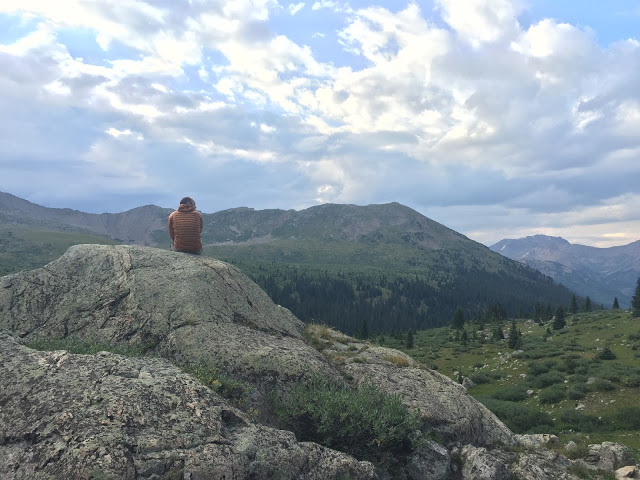
Second: we were hiking the Colorado Trail and we arrived on day 18 at Lake Ann, a small alpine lake tucked into the crook of a mountain. I had been struggling with intestinal issues for the last few days, and so I’d missed out on the decadence of real meals while we were in town. When we reached Lake Ann, my tummy had finally settled and the view was brilliant.  We had miles of valley below to enjoy and rejoice in before sleep. As we set up camp, my partner surprised me with a can of alcoholic root beer, a decadent treat I love and wasn’t able to enjoy when we were in town. We shared it on a rock overlooking a sun-kissed valley and fell asleep in the tent together.

These two meals weren’t remarkable because of what we ate. I don’t even remember what we ate. Maybe it was ramen (it likely was, at Lake Ann). These meals were unforgettable because of where we were, both in the world and in our relationship. Things were flowing—we were connecting, discovering each other. We were adventuring together, our senses attuned to the beauty of simple things—like a can of root beer on a rock watching the sunset, or a candle on a small table at the edge of the ocean.

I was reminded anew of one of the things I love most about my partner. He doesn’t care about expensive or “fancy” dinners out. No five star restaurants, no waiters, no cloth napkins (or any napkins). Just the two of us and the wonder of nature unfolding around us.
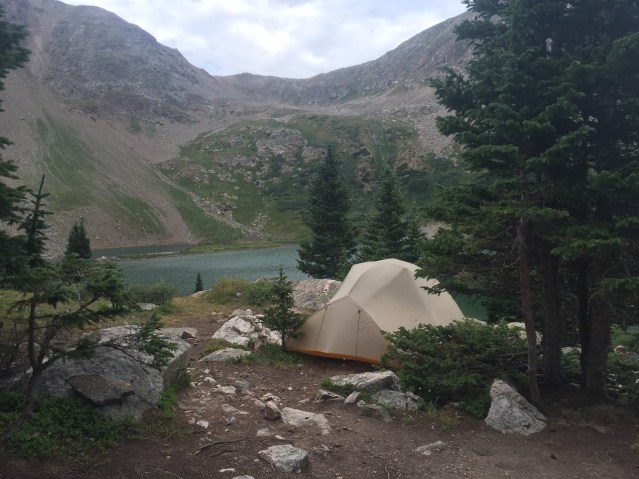
 

lake-ann-2
Lake Ann

Toilet paper, Tampons, and Phone Calls: Affording Prison in California

An interview with a recently released prisoner on the financial burdens associated with imprisonment

KT was incarcerated in California for one year over charges related to fraud. She is a friend of mine, but I did not find out she was in prison until she had served more than half of her sentence. When I learned she was incarcerated, I reached out to her family to offer support and began visiting her every week for her last couple months in prison. She was held in Dublin FCI, just a few miles from my house but very far from her home in Southern California.

In communicating with KT, I was struck by the huge impact of prison costs on not just KT’s life, but on her whole family. Seemingly small expenses in prison mounted and became burdensome for her wife and eventually created major rifts between family members, with ramifications that continued after KT left prison.

This interview was conducted 19 days after KT was released in early December, 2017.

Continue reading “Toilet paper, Tampons, and Phone Calls: Affording Prison in California”

Midweek Camping

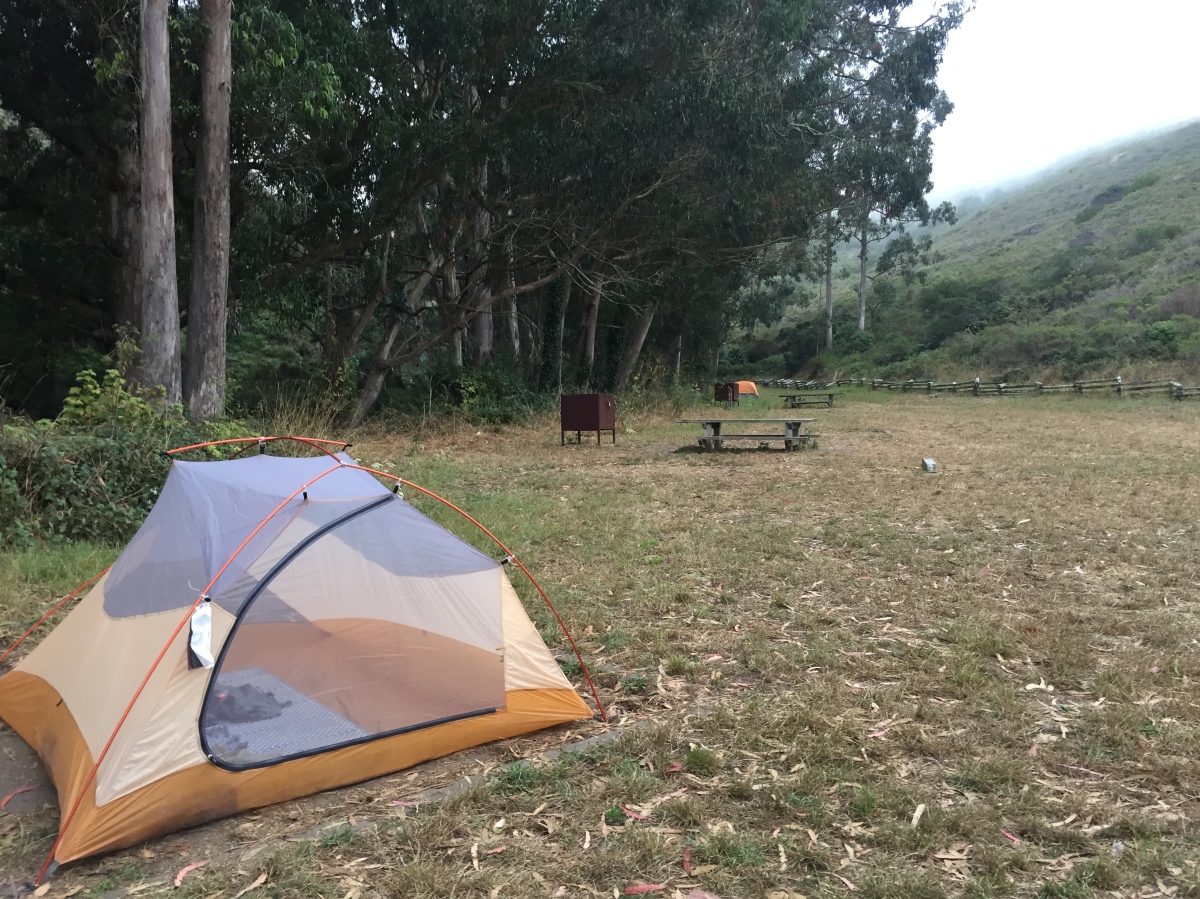
I started new project this month: sleeping outside one night a week.

It works like this: I come to work extra early, and then I feel less guilty about heading out at 4:30 or 5. I fight through the San Francisco traffic until I reach a wilderness permit station, pick up the permit that’s waiting for me in a box out front for latecomers, then head out to a campsite. I stop on the way and buy a veggie wrap, throw it in my backpack, then park at a trailhead, strap on my pack, and hike out. I pass people on the trails, and they eye my backpack. I assemble the tent, devour half a wrap, let the sun set all around me, zip away the world and stare up through the bug netting at the endless stars or the mist or the clouds or the hillsides. I wake before 6, and I run or I don’t run, and I’m back in the office by 8 AM, slipping into the shower on the first floor, settled in my office chair before 9.

The idea is to get wilderness into my life, in small bits and pieces, whenever I can.

Continue reading “Midweek Camping”

Sierras in Deep Snow

Ignoring the strong warnings of the National Park Service—including my partner, who is a ranger for the Park—I organized an all-women backpacking trip to the Yosemite High Sierras for the weekend of July 4. Normally the Sierras are passable by early July, but record-setting snowpack this past winter meant many areas are still socked in with 6+ feet of snow and ice. Streams that are normally passable by now are violent, uncrossable rivers. Trails aren’t visible. And unfortunately, none of us had any experience backpacking in winter conditions on this scale.

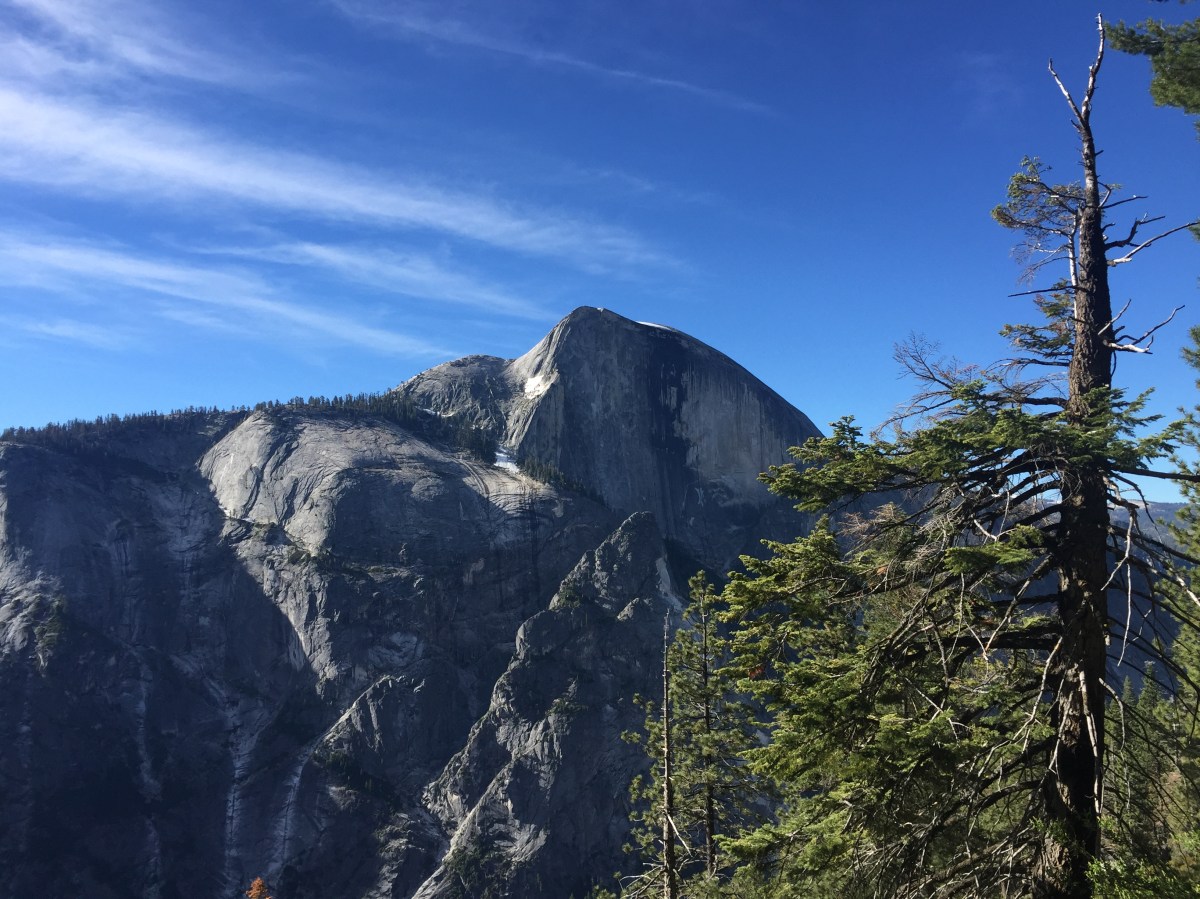
The three of us walked, slid, postholed, stumbled, climbed, and—during one particularly difficult spot—crawled from the Cathedral Trailhead at Tuolumne Meadows to the top of Half Dome and then down to Yosemite Valley over the course of three days. It’s a trip that I believed would be on the easy side of moderate when I first planned it, a trip that would have been fine on a normal year, but which turned into the most physically challenging and dangerous backpacking trip of my life.

Continue reading “Sierras in Deep Snow”

What It Means for Our Movement That the NSA is Halting One of Its Worst Surveillance Practices

eff-nsa-utah-data-center
NSA’s data center in Utah

The New York Times broke the news Friday that the NSA is ending a surveillance program that has been the subject of years of criticism by civil liberties advocates and members of Congress alike. The news came in waves: a brief snippet from Charlie Savage, then a slightly longer update, then confirmation from the NSA, and then the final version (I assume) from Savage that went up hours after the original.  The NSA is promising to end the practice of collecting Americans’  emails and text exchanges with foreigners that mention key identifiers—like email addresses—that aren’t actually directed to or from the targets of NSA surveillance.  (For my fellow tech policy nerds, we call this “about” surveillance.)

Not only that, but the NSA promises to “delete the vast majority of its upstream internet data to further protect the privacy of U.S. person communications.”

My colleague Kate has a thorough write-up of how to consider this within the larger context of NSA reforms Congress needs to enact, and everyone should go read it. I’m not here to talk about the legal and technical landscape related to this announcement.

I just want to talk about how awesome this moment is.

Continue reading “What It Means for Our Movement That the NSA is Halting One of Its Worst Surveillance Practices”

6 Lessons I Learned in the First 6 Months of Nonprofit Management Consulting

7258284934_19a8260f0c_k
CC BY-ND 2.0 Deveion Acker

Last October, I offered up a bundle of my ideas, dreams, and experiences, granted it a name and a business bank account, and launched it onto the World Wide Web: Groundwork Consulting.  Groundwork was a way I could formalizing and publicize work I’d been doing for years on the side: working with friends and acquaintances in the nonprofit world to tackle management challenges and think through new opportunities.

Six months later, I realize I’ve been learning a ton about nonprofit management consulting without a lot of chance to reflect on it all. So, here’s a listicle of lessons to commemorate the journey so far:

  1. You can’t change other people. You can only support them in changing themselves. I think this is a lesson I will be blessed to learn again and again in my consulting work. As a management consultant, I can’t make someone change. When talking to a client who has slipped back into a bad pattern, I sometimes wish more than anything that I could just do the work for them. But that’s doesn’t actually help anyone. Only the client can ultimately do the work. My job is just to be a coach, a collaborator, a sounding board, a guide, and a cheerleader in their process. The process can be slow and stumbling at times, but it’s their journey and I need to be present to support it.
  2. My job is to see the best version of my clients. The more I do this work, the more convinced I become that my ultimate work is to believe in the best version of someone else, and reflect that vision back. No matter how down a client may feel on where they are in adopting changes, my job is to keep strong in the belief that they can and will reach their ultimate potential. The world is full of doubters and nay-sayers. But through my consulting work, I get to always believe in the best in others.
  3. Nonprofits are systems whose problems must be viewed holistically. Sometimes a client wants me to help address one small piece of the organization. But no sooner do we begin than all the connected problems and concerns start rearing up, demanding attention. Fixing any one problem requires stepping back and looking at the whole picture.
  4. Changes have to be made one tiny bite at a time. Success helps clients feel optimistic and engaged, and helps them believe in the process. But if they bite off too much, they’re destined to trip up. So my job is to make it easy by drilling down to a single, achievable thing that we can change right now, and then moving on to the next step only once the first change has been mastered.
  5. Relationship problems are the root of many organizational problems. Sometimes nonprofits come to me wanting solutions to what they see as huge organizational problems around structure and strategy. And while it can be useful to get aligned on structure and strategy (and I love hosting those conversations), many of the day-to-day issues boil down to relationship issues. These look like communication problems, unresolved jealousies, hurt feelings, and broken trust. Fixing the relationships makes all the other problems easier to address.
  6. I need to practice what I preach. Even as I have advocated for other people to believe in themselves, practice self-empathy, repair relationships, and adopt big changes by splitting them up into manageable bites, I see countless ways I fall short in these respects. As I look at the next six months, I’m recommitting to holding myself to the same ideals I hold my clients, including making sure that I’m not letting the work run my life. 

I’ve had a lot of other moments of insight along the way, but not all of those lessons fit neatly into a list like this. So I’ll leave it there for now. And if  you’re interested in my nonprofit consulting services or just want to brainstorm about management challenges you’ve been facing lately, drop me a note and let’s chat.

Note: this was originally published on Groundwork.

Standing on Top of a Cliff

IMG_4277

I love She Explores, a podcast about women in the outdoors. The host, Gale Straub, is sincere, grounded, and insightful, and she approaches the podcast with curiosity and compassion. Listening to the podcast makes me feel calm, like I walked around the lake near my house.

Recently, Straub tackled a particularly complex and sensitive topic: mental illness and the outdoors. She interviewed people who suffer from anxiety and depression, and many talked about how going out into wilderness helped them.

Straub interviewed Sonya Pevzner, who offered a description of what it’s like to have anxiety. I think it’s one of the best descriptions I’ve ever heard. She said:

Anxiety feels like you’re standing on top of a cliff. And you’re about to go cliff jumping, and so you’re clipped into your harness. And you’re about to jump, and then at the last minute you remember that you might not have secured all of your harness properly and that you might fall to your death. You’re 99% certain that you secured the harness, but there’s that little seed of doubt. And then right before you’re about to jump, you’re like Oh my god I could die. That’s what anxiety feels like.

But you’re, you know, sitting on the couch thinking about something you have to do or wondering about something you have to do or even you’re going into work or you’re traveling. Anything that you’re doing, when you’re anxious about it, is just horribly exacerbated. And even though you know you did everything right—you locked the door, you turned the stove off, you nailed the interview—you know there’s nothing to actually worry about. If you objectively look at it, you know there’s little cause for anxiety, but your mind turns it into this life or death situation. And it’s so hard to be objective when you are in that space.

Listen to the entire podcast.

DogVacay Is Good for Dog Sitting, Lousy for Privacy

DogVacay is a website where people who love dogs can offer dog sitting services. I know because I love dogs but can’t have one right now because of travel and career commitments. So sometimes I host dogs for friends or through DogVacay. I love all the dogs who have visited me through the site, even the ones that were a tiny bit neurotic.

What don’t I love? DogVacay’s privacy practices.

Yesterday, I got an email from Nextdoor.com. It asked me to “verify my email address.”
verify_your_email_address
I didn’t remember visiting nextdoor.com, or signing up for an account. So I ignored the email.

Later that morning, I started getting emails from Nextdoor. They were updates from people in my neighborhood who were posting to Nextdoor.

It appeared that somehow—for reasons I couldn’t understand—somebody had set up an account for me on Nextdoor. So I visited Nextdoor and reset the password associated with my email address, then emailed Nextdoor to try to find out what was going on.

how_did_i_get_signed_up

Nextdoor replied a few hours later:

nextdoor-reply

Oh, betrayal. Could DogVacay—a site that had only brought me joy in the past—really have shared (sold??) its account data with Nextdoor without so much as notifying the users?

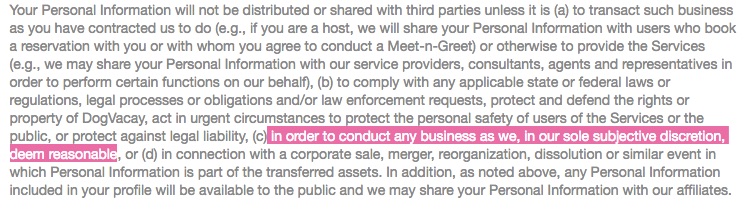
I popped over to DogVacay’s privacy policy. The answer was probably yes.

our_privacy_policy___dogvacay

Personally, I think it’s utterly unreasonable for DogVacay to take my account information and use it to sign me up for a different website without telling me. I think the folks at DogVacay should have realized that, if I’d wanted an account on Nextdoor, it was well within my abilities to go set one up.

I also think Nextdoor should have held DogVacay to a higher standard, and not accepted the new accounts unless 1. DogVacay had notified its users and 2. Users affirmatively consented to it. At the very least, Nextdoor shouldn’t have kept sending me email when I hadn’t signed up for an account or verified my email address.

DogVacay, do better. Your business exists because of dog sitters who entrust you with their data, and Rover.com is waiting in the wings.

UPDATE (January 20, 2016 at 2:15 PM)

I emailed my concerns to DogVacay, offered to talk to them, and sent them a copy of this blog post. I got two emails from them. The first at 10:45 AM with the subject line “Exclusive: Grow your business on Nextdoor for free.”

dog-vacay-announcement

Note that there’s no language like “We set up an account for you on another site.”

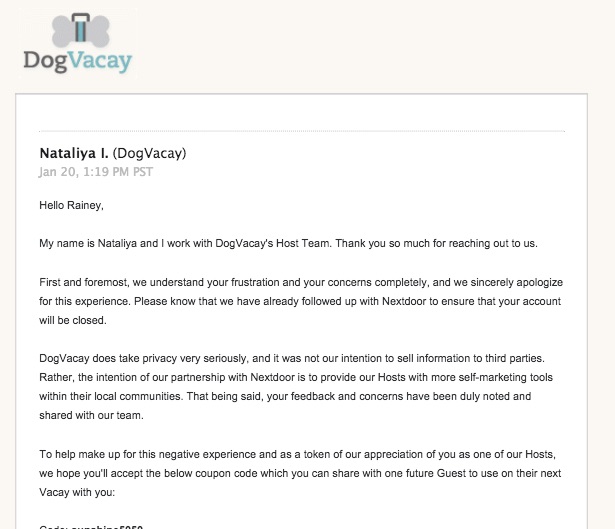
The second email came at 1:19 PM, from a customer service rep:

dog-vacay-replies

Then there was a coupon code for $50.